Whose Knowledge Counts? Bringing Lived Experience into Mental Health Research in North Africa
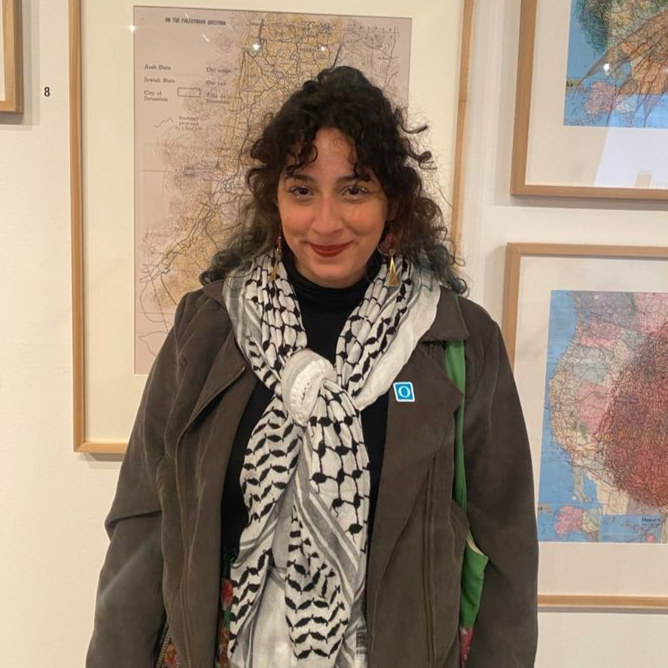
Rawda Zaki is the Community Engagement Lead for the Possibilities Collective North Africa Region. She is based in Egypt and is a final year sociology undergraduate researcher with a strong interdisciplinary research background spanning mental health, psychology and cognitive science.

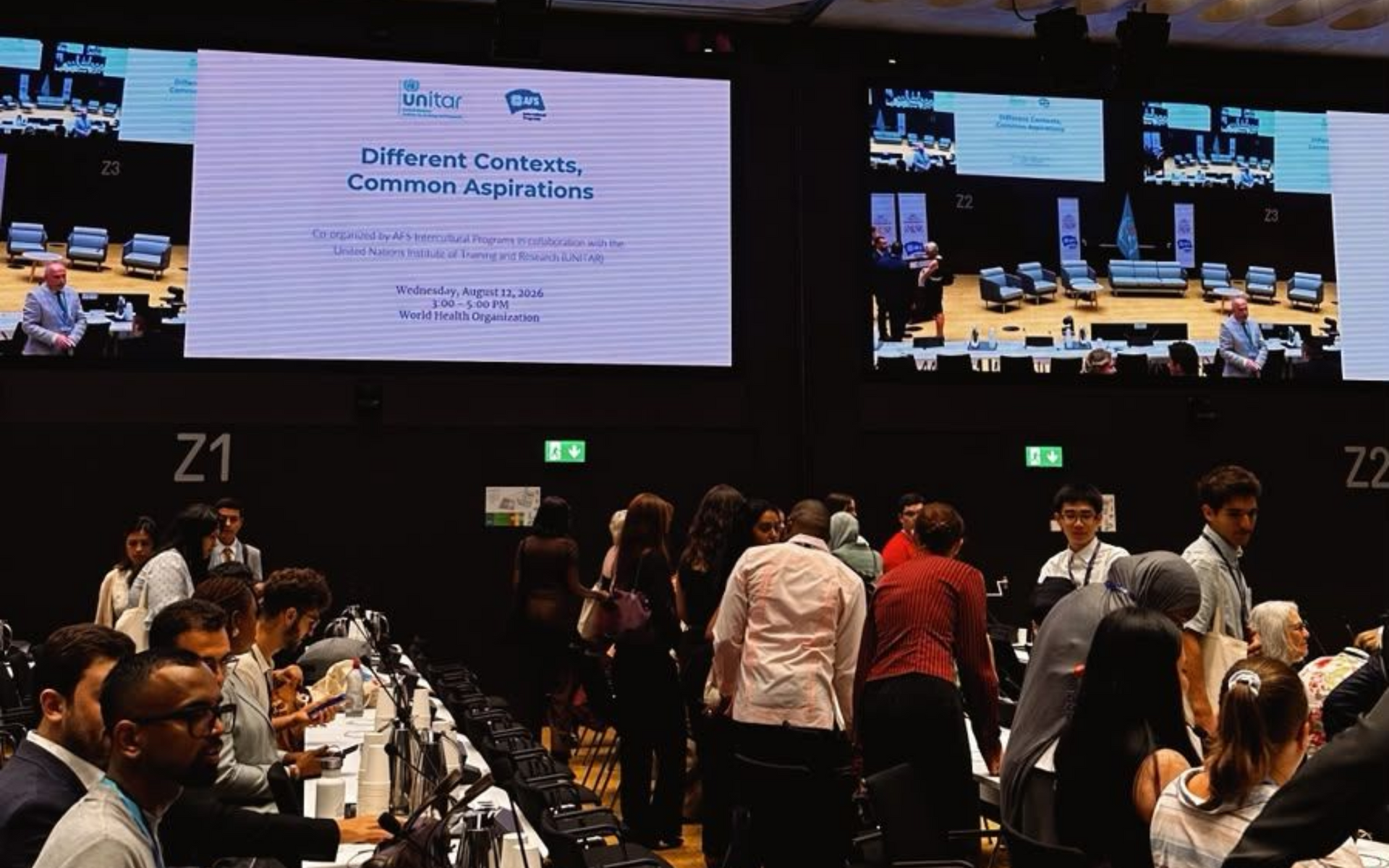
I recently had the honor to attend the AFS Educators Program Academy and its Youth Assembly in Geneva, representing Egypt as a delegate, with the Youth Assembly hosted at the World Health Organization (WHO). Taking part in this unique, stimulating space gave me an opportunity to engage with young people and educators from different contexts, while relating what I was learning to my current work as GenMH’s North Africa Community Lead and connecting it directly to the realities I have experienced and observed across our current co-designing/co-production phase in the region. It also made me think about how these conversations can inform what we are trying to build through the Possibilities Collective work theme, particularly when it comes to creating more accessible pathways for young people with lived experience (PWLEs) to learn, participate, and eventually shape the systems that affect them.

What stayed with me most from the co-designing stage and the workshops our regional team virtually conducted across Egypt, Tunisia, and Morocco, is that the conversation was never just about “mental health” in a narrow sense. It was really about what it feels like to grow up inside a North African bubble of similar realities, even when the three countries are not identical. The systems surrounding young people may look different, but many of the pressures underneath are recognisable: rigid and unequal educational systems, economic systems that make independence increasingly difficult, family and paternal structures that shape major life decisions, and sociopolitical environments that affect how safe, hopeful, and in control people feel about their futures.
The pressure is both internal and external. Young people are expected to succeed, become independent, support their families, and not fall behind, while often having very little room to fall apart. There is a lot of silence, stigma, survival, shame, and family responsibility. Even asking for help can become another burden when you have to explain why your problem is serious enough, convince others that you need support, and then discover that the support may not even exist or be accessible.
This is why I found the conversations around community psychology particularly interesting. Community can be a source of protection, belonging, and survival, especially in contexts that are not completely individualistic in the way some Western mental health frameworks assume. Families, friends, neighbours, religious communities, and informal networks can all play important roles in how people survive difficult periods. But the same structures can also become sources of pressure, surveillance, judgement, and silence. Community can be where someone first receives care, but also where they learn that certain forms of suffering, identity, lifestyle, or thinking are unacceptable.
This tension also appeared in discussions around Western clinical models versus more community-based and culturally familiar approaches. I do not think the answer is to romanticise community or assume that traditional approaches are automatically more culturally appropriate or relevant. Some can be genuinely supportive, while others rely on harmful assumptions or pseudo-science. The challenge is figuring out what can actually respond to the problems young people are facing now, rather than choosing between “Western psychology” and “local culture” as if they are completely separate options.
Young people are dealing with changing forms of social isolation, digital pressure, current AI-related pressures, identity and relationship changes, addiction, unemployment, academic competition, migration, climate anxiety, political frustration, and constantly comparing their lives with possibilities that may not be available to them. We cannot always respond to these realities with old explanations or imported models developed for completely different social environments.

At the same time, some of the most important voices remain inaccessible to the systems that are supposed to listen to them. People may lack reliable internet, time, money, transportation, language access, confidence, or the social and political freedom to speak openly. Others may technically be reachable but still excluded because they do not know how to enter the spaces where research and decisions happen.
There is also a clear distinction between being invited into a research project and being able to enter the world of mental health research.
For many people we spoke with, the barriers begin long before participation. They involve access to education, postgraduate study, research skills, journals, mentors, academic language, and the hidden rules of academia. The people with the most direct knowledge of certain problems are often the least likely to have the credentials that make institutions immediately take them seriously.
This is something I personally relate to. My own entry into mental health and research has not been a straightforward path. Much of it has involved finding opportunities myself and almost carving out a path when external support was not always there. It has often felt scarce in a way that made me think about how unfair the system can be when someone in the Global North can have the same passion, the same hunger to solve the problems affecting our communities, and the same potential as someone from our region, but have far more opportunities and institutional support to act on it.
My path has involved moving between mental health advocacy, lived-experience work, social sciences, and trying to understand systems that were not necessarily designed with someone like me in mind.
This also brings me to another issue. Medical sciences, engineering, and the natural sciences are often placed on a pedestal before a person has even entered high school. When it comes to solving “real-world problems”, people are often encouraged to enter these fields, while social sciences, humanities, law, and related disciplines can be treated as less worthy or less intellectually demanding. This stigma affects who enters these fields and, eventually, who gets to contribute to research on social and mental health problems.
This becomes even more visible in areas such as neuropsychiatry, (organisational) psychology and mental health research, where research laboratories, funding, and opportunities are often concentrated in wealthier countries. Securing them ourselves without intervention of Global North countries are being hindered due to many complex, interconnected systematic and bureaucratic challenges. As a result, aspiring PWLE researchers from our region, realistically, with fewer resources may have to seek remote research programes, international opportunities, or even expatriate simply to access opportunities that should not have been geographically restricted in the first place.
That made me very aware that entering research is not only about whether someone is intelligent or interested/dedicated enough. It is also about whether they can find the door. And even when someone finds the door, they may not know what they are supposed to do once they get there. Not forgetting the MH burdens come with it.
This is why lived experience can be particularly valuable. PWLEs are often already 'creative' in how they understand and respond to problems. They create informal support systems, find workarounds, adapt language, and solve problems with limited resources. They may not always have the formal terminology, but they can understand problems at a level that cannot be gained from studying them from a distance.
However, there are still important questions. How do we create routes for PWLEs to enter research without expecting them to first become exactly like academics? How do we recognise their expertise without exploiting their personal stories? How do we give people influence rather than simply asking them to share their experiences?
Because being asked to share your story is not the same as having power over what happens with it.
The diversity of the participants made these questions even more visible. We had people from different age groups and professional backgrounds, including clinical and academic spaces, community work, activism, student experiences, and lived experience. People were not speaking from one shared mental model. Some were speaking clinically, some from community work, some from activism, some from academic training, and some from lived experience that had never been translated into formal language before.
That distinction between “expert” and “non-expert” really started to break down.
Someone could have a formal qualification and still be speaking from personal experience. Someone without a research degree could have years of direct community knowledge. Someone could have lived through a mental health challenge and independently taught themselves about psychology, neuroscience, or research. These categories are much more fluid than research systems often allow them to be.
What this showed me is that North Africa is not lacking intelligence, insight, creativity, or people who want to contribute. It is lacking enough shared spaces, both in person and virtually, that can hold all these forms of knowing without immediately ranking one above the other.
That is where I see the potential of the Possibilities Collective. I see it more as a bridge between people and systems that currently do not connect well enough. It could be a place where someone with lived experience can begin exploring mental health research without already knowing all the academic language, where a student from a less-resourced background can find guidance and mentorship, and where researchers and professionals can encounter perspectives they may otherwise never reach.
Most importantly, people should not have to choose between being “the person with lived experience” and “the person who wants to become a researcher.” They should be able to be both.
The participants were already showing the potential to contribute in non-traditional ways. They were willing to think creatively, question existing models, bring together different disciplines, and imagine alternatives. The question is how, where, and when we create the conditions for that creativity to become sustainable.
Because creativity without access can remain only an idea.
This is where I think the Possibilities Collective could meet many of the needs raised in the workshops. Not by creating another platform where information or opportunities are simply uploaded and people are expected to navigate everything alone, but by creating actual pathways into learning, research, mentorship, collaboration, and meaningful participation.
These pathways also need to be localised to people's realities. Inclusion cannot simply mean bringing people from different countries into the same online space. It has to consider differences in education, language, confidence, internet access, financial resources, professional experience, identity, beliefs, and the amount of time people realistically have available.
Not everyone will enter through the same door. Someone may begin with an accessible workshop, someone else through a peer group or mentorship, and someone else through contributing their lived experience to a project. The platform should meet people where they are instead of assuming everyone has the same confidence, education, language, or access.
On a final note, I do not think the region needs another solution designed from the outside and simply brought into North Africa. Localisation and contextual precision are the answers.
We need more spaces where people from the region can collectively decide what the problems actually are, what knowledge counts, what support should look like, and what kind of future they want to build.