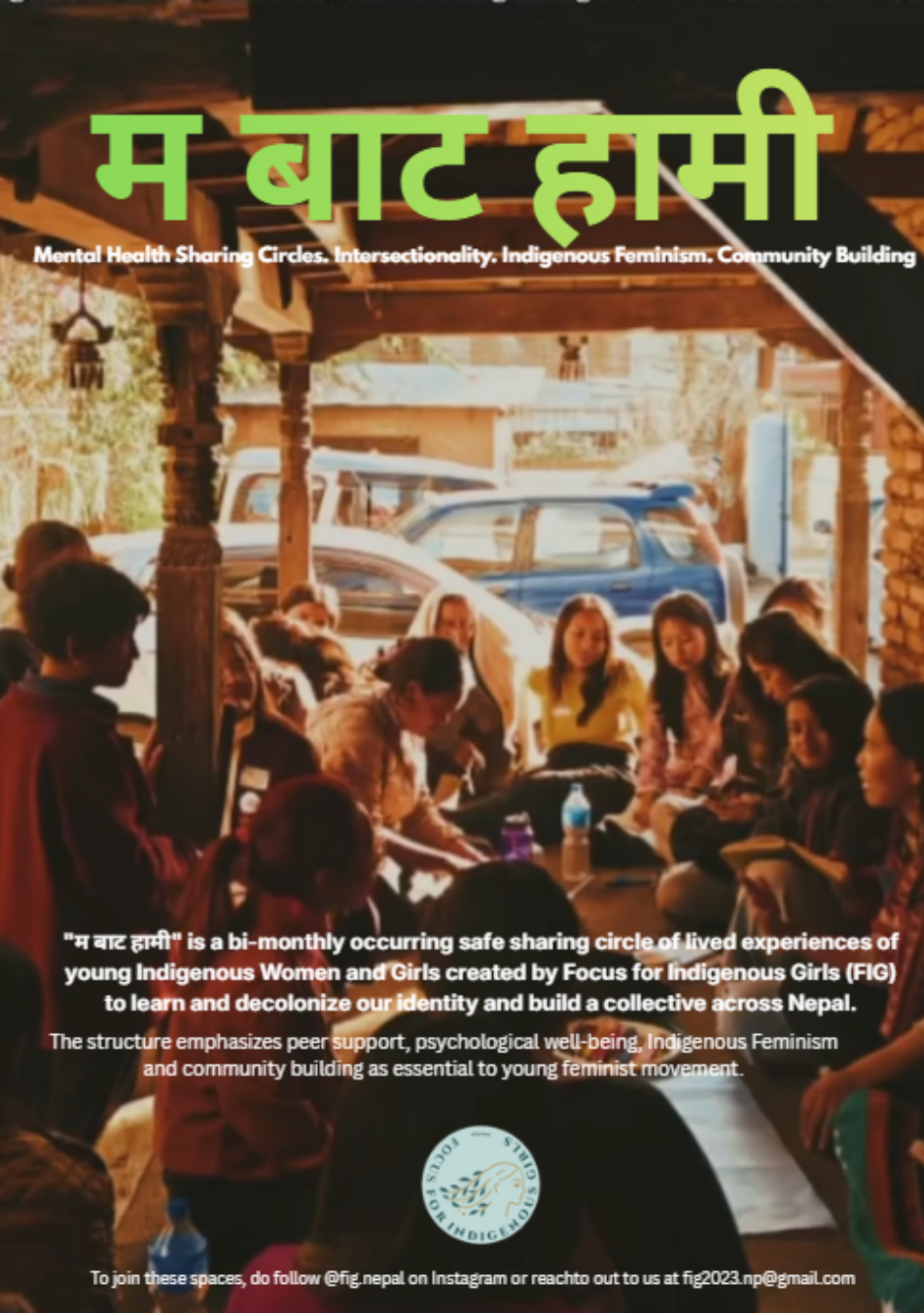
Building a space “म बाट हामी “ (Ma Bata Hami)
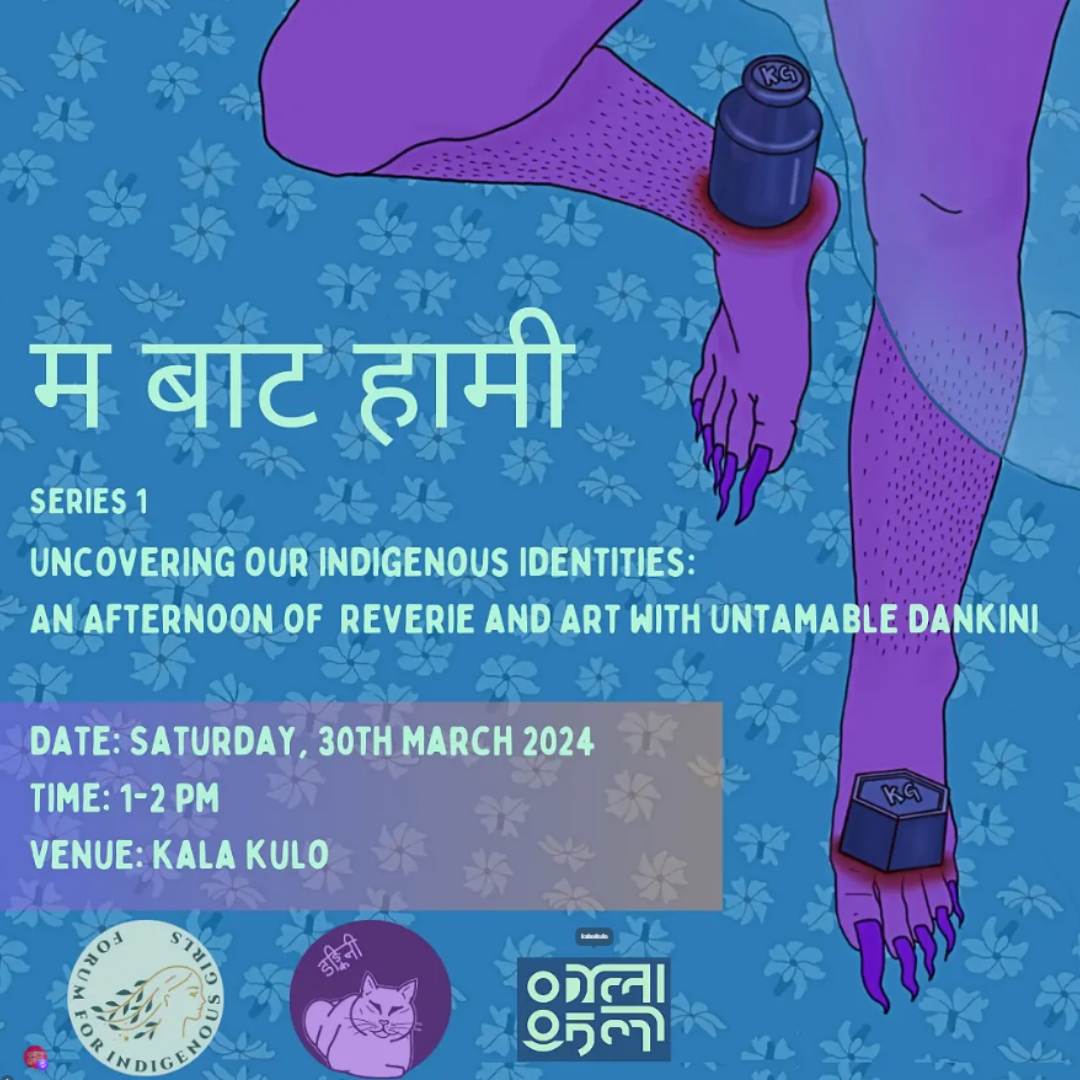
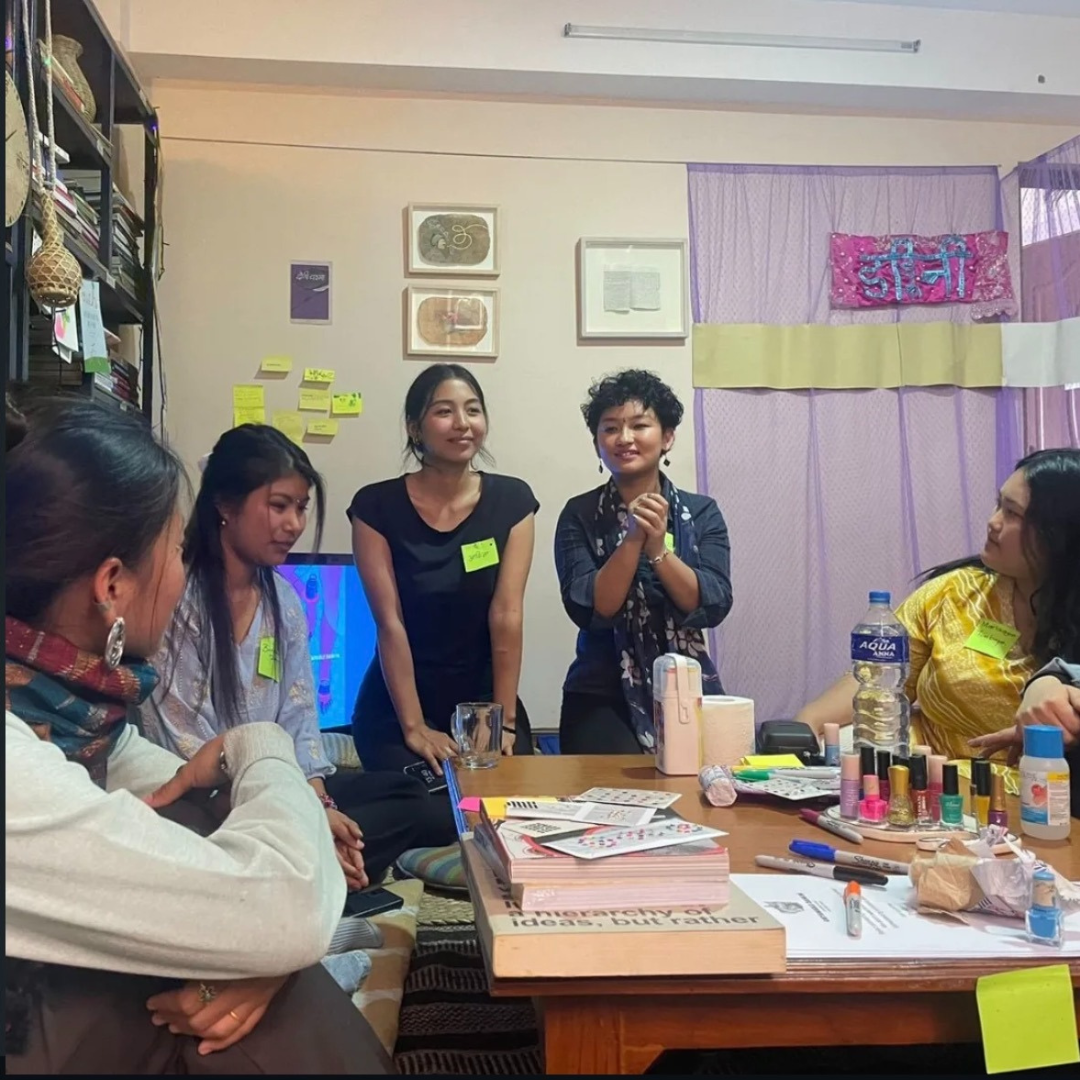
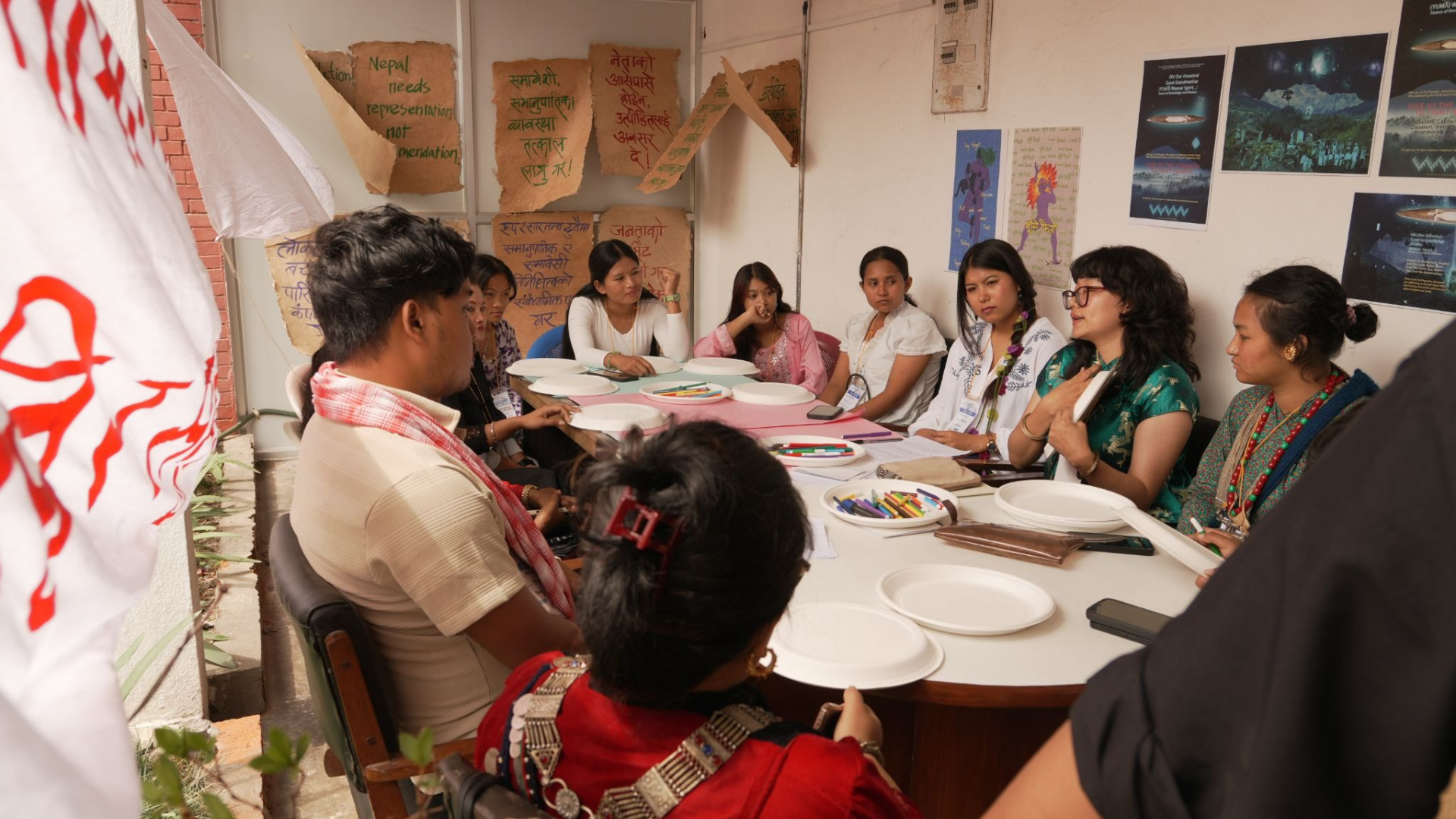
That conversation sparked an idea. We began designing the first gathering alongside Sheelasha and her Indigenous artist collectives Artree Nepal, Kalakulo and
Untamable Dankini,
an initiative by Sheelasha that anchors itself in rest, play, and sensory joy to navigate and challenge the complex interplay between identity and structural power. Also, in Newa: community, ‘Dankini’ often denotes an outspoken feminist women.
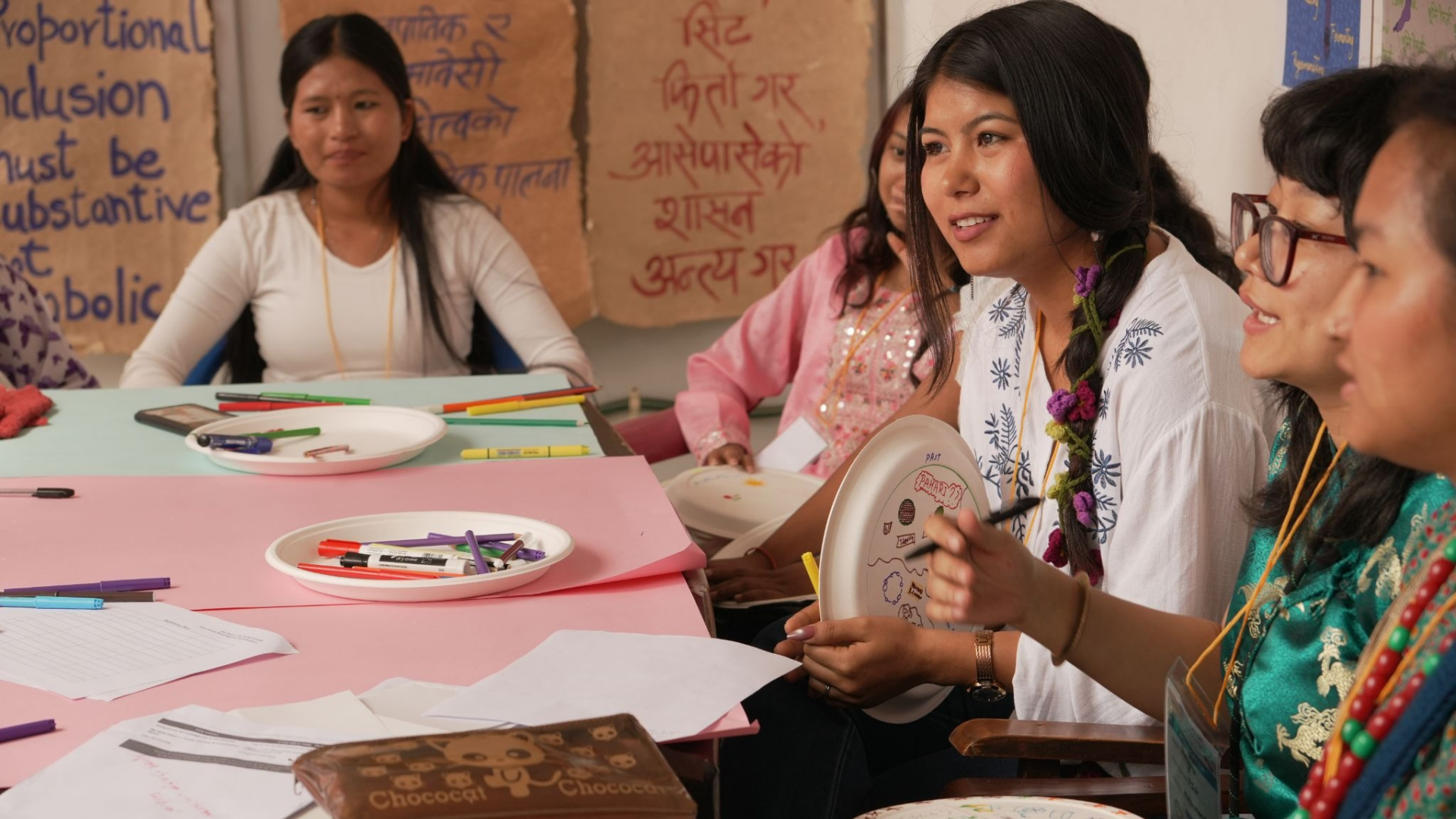
At the end, Sheelasha facilitated an exercise where each of us wrote down our thoughts, our anger, our pain, or fatigue we carrying onto a paper. We passed the papers around the circle to complete it through writing or drawings. It was about
harmonizing our anger: turning frustration into shared emotion and a collective power. Indeed, we parted as "we" indigenous girls.
Never Said Before: Intergenerational Trauma
As our bi-monthly series continued, we held spaces for lived experiences never shared before with various mediums. Sometimes we watched documentaries and invited Indigenous feminist elder sisters to facilitate dialogues on reclaiming identity, statelessness, land rights, and historical struggles. In each of these spaces, almost all participants were in their very first time being in a space dedicated to Indigenous girls' and women's lived experiences— often dismissed as regressive or casteist-separatist propaganda.
I want to share a moment from one of the sessions where I found myself crying. I hadn't planned to, but the conversation turned to experiences with generational gap and language trauma. For some, language trauma meant being mocked for speaking one’s language or for having an accent; for me, it was the pain of not being able to speak my mother tongue, which was a direct consequence of intergenerational trauma my parents experienced when they moved to Kathmandu city for better work opportunities. It was also my first time speaking about it and naming what it was. Sharing it was raw and intense, but it also felt deeply powerful letting it out while being surrounded by my sisters.
Care as the Core of Movement Building
म बाट हामी is an essential tool. As young Indigenous women founders, with an academic background in psychology and social work, we understood that care, well-being, and unpacking trauma and identity confusion must be at the centre for Indigenous youth organizing. We live in cities and navigate systems that thrive on our alienation—systems designed to erase our histories and mold us into a singular, homogenized identity of 'unified Nepali'. Our parents were often too busy surviving, our textbooks don't teach about our histories, and dignified media representation is virtually rare. Yet we carry pride, rootedness, and ancestral memories within us; we lack spaces to hold them.
म बाट हामी became that exact space.
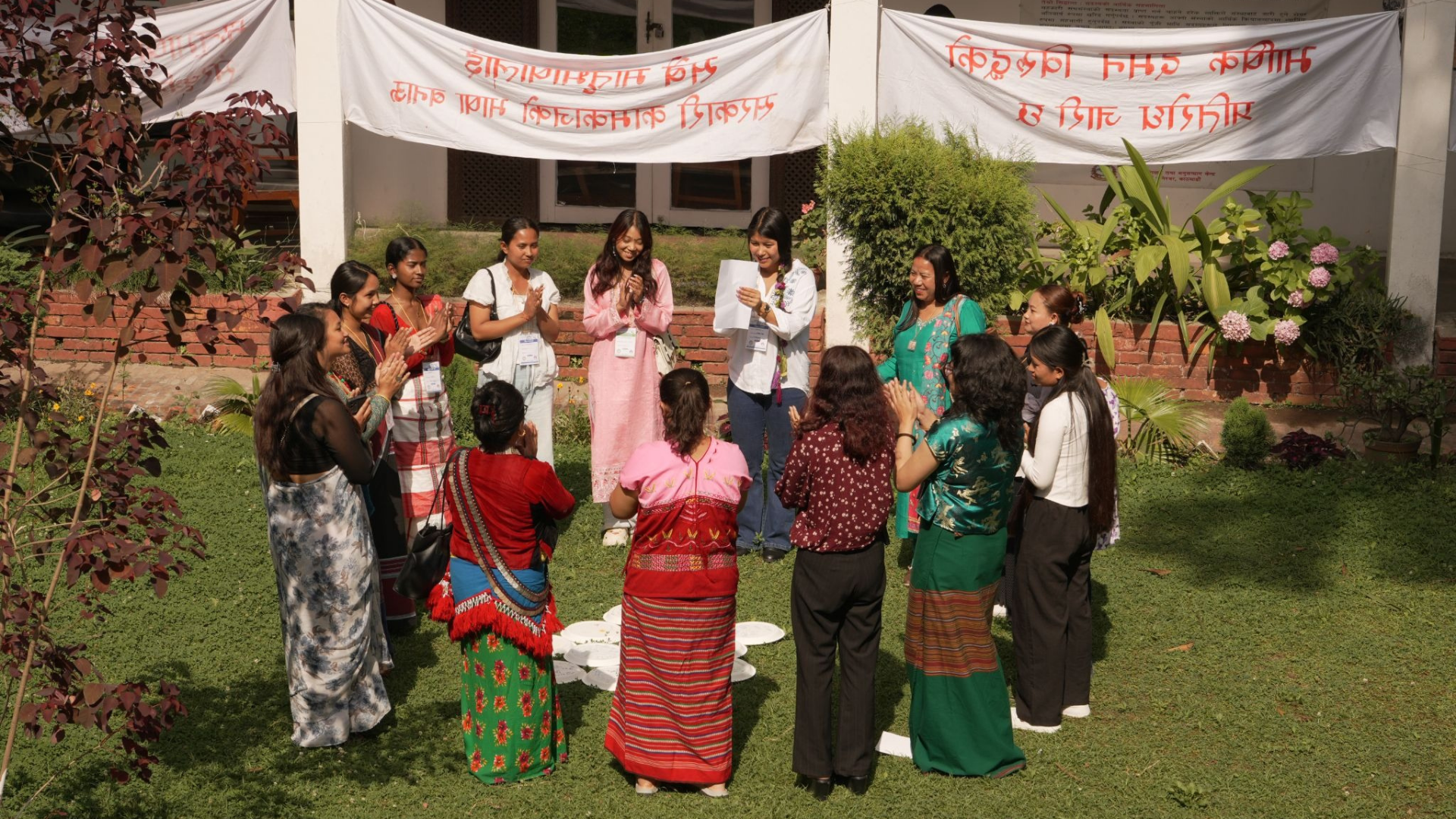
Over time, they weren't just standalone events; they became an integrated methodology of our broader actions. When we organise trainings for instance on land rights, we commence it with this reflective circle with the belief that spaces with young Indigenous girls must start by unpacking our stories: who we are, how we understand our communities, and what lived experiences we carry. Conversations around identity discomfort, feeling "not indigenous enough", suppression, and confusion must come first, if not first, authentic political agency cannot be unlocked.
We also integrate Mandala-making—using visual drawing and creative expression to process our experiences. During one gathering with over 25 girls, as stories were being shared, deep grief and difficult experiences were shared, and participants cryed together. Unprepared for that degree of emotional release and relatability, we rushed to find some tissues. Since that day, I have always made sure to have tissues on hand. This space we built has grown into rooms that allowed such degrees of vulnerability.
The Realities of Organizing as Young Women
Over the last year, Nepal has undergone major political transitions. FIG has also been stepping into frontline activism and land rights resistance of Indigenous women. Because of these challenging and urgent work, we haven't always maintained the bi-monthly regularity of
Ma Bata Hami. I am highlighting a reality honestly: these healing spaces are not easy to organize. They require immense emotional labor, safety, preparedness, and appropriate timing. A contradiction did occur. While we understood care as central to movements, the urgency of resistance, navigating systems and empathy we carry as young women organizers, care has been pushed right back to the margins.
I continuously talk and advocate for these approaches as essential to the well-being of young Indigenous women and as a path toward decolonization. Its crucial to understand that young Indigenous women and girls do not view care and trauma healing as an activity. We integrate it to the forefront of movement-building, feminist organizing, and resistance.
I want to say to policymakers, funders, researchers, and, most importantly, our Indigenous elders: identity trauma, cultural disconnection, shame, the feeling of not being "Indigenous enough," and the lack of safe spaces for decolonization sit at the very center of working with Indigenous youth. But recognition isn’t enough. We must ask:
Who creates space of care? Whose labour makes it possible and is that labor recognized and resourced?
To truly understand and empower young Indigenous people, we must intentionally care for these lived experiences, embedding creative, safe, community-rooted well-being into every step. Spaces like
Ma Bata Hami is not simply a space to vent; it can be a space where young Indigenous and marginalized peoples can make sense of our lived experiences, understand what we carry and determine what collective actions is needed for our rightsm liberation and healing.