Finding Authentic Portrayal of Chronic Illness & Disability in Romance Books
Kritika Narula examines how romance novels offer an affirming, nuanced framework for portraying chronic illness and disability. By centring care, connection, and community, the genre provides a compassionate template for stories that balance authenticity with hope.
Representation of chronic illness and disability in fiction is often a challenge. It’s a slippery slope; too easily, stories slip into extremes: they can be glamorised or sensationalised; they can become too tragic or too one-dimensional. Disability stories, in particular, are often boxed into two familiar patterns: the overly tragic, “woe is me” narrative, or the overly heroic, “they overcame all obstacles” arc.
There’s a big issue when we think about these extreme narratives with respect to chronic illnesses. Chronic illnesses don’t fit neatly into either of these frameworks. A chronic illness is ongoing, not something to be defeated once and for all. It isn’t a story of a singular victory or loss, but of daily management, adaptation, and resilience. That’s why traditional plot structures—like the “rags to riches” or “challenge to victory” arc—don’t quite work here. But one genre that’s doing a formidable job of portraying these realities, cloaked in a lot of hope, is romance.
Why Romance is Uniquely Suited to Chronic Illness Narratives
The genre allows the main characters to maintain an affirming, tender, and hopeful stance regarding their chronic illness. Usually, when a chronic illness diagnosis befalls a person, it is easy to descend into catastrophic thinking, assuming that life is going to be extremely hard. And while there’s no denying the very complicated nature of this type of grief, within the structure of a romance novel, there’s commensurate hope to combat this grief.
TL;DR: They don’t deny the reality of the pain, but still manage to offer a refreshing representation of hope in living with such conditions.
Romance as a genre is uniquely positioned to represent chronic illness because of its built-in elements. Every romance comes with an inherent promise: a happily ever after (HEA) or, at the very least, a happily for now (HFN). Readers enter the story with the assurance that, despite the bumps along the way, the ending will be hopeful. This framework enables romance novels to portray characters, living with and loving despite chronic conditions, without reducing the narrative to a tragedy.
Illness =/= identity
How do the main characters get closer to each other in a romance novel? They share vulnerable moments, stand up for each other, and show up when it's most important. There is so much joy in connection and finding your person. This way, a romance plot ensures that illness never becomes the sole focus of the character’s life or story. Instead, it’s one part of a larger tapestry of vulnerability, intimacy, and growth. Chronic illness becomes a lens through which the characters—and the readers—explore love, community, and resilience. It grounds the story in authenticity: yes, the pain and limitations are real, but they coexist with joy, laughter, affection, and connection. Romance is able to balance authenticity of pain with narrative hope in a way that few other genres can.
This balance also reassures readers. First, it affirms that struggles do not define a character’s entire identity or life. And second, it acknowledges that while these struggles permeate every aspect of daily existence, within that reality, there is still space for love, personal growth, vulnerability, and the sustaining power of community.
Tropes to the rescue: Caretaking and Found Family
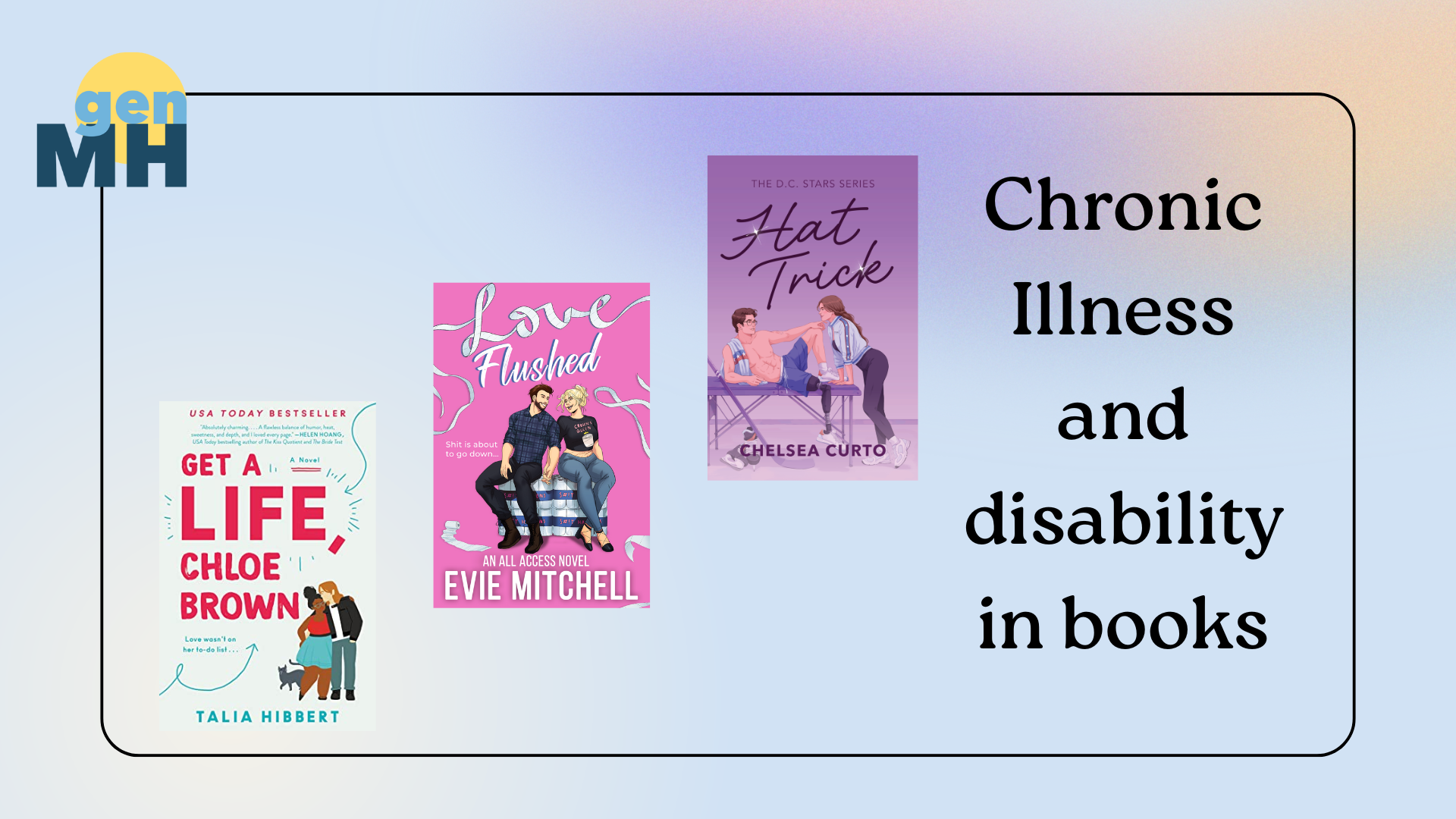
Chronic illnesses are often steeped in stigma and misunderstanding. Because they’re invisible, they’re also easy to dismiss. People can’t see them, so they struggle to empathise with what they don’t understand. As Get a Life, Chloe Brown incisively portrays:
“Most people had trouble accepting the fact that Chloe was ill. Fibromyalgia and chronic pain were invisible afflictions, so they were easy to dismiss. Eve was healthy, so she would never feel Chloe’s bone-deep exhaustion, her agonizing headaches or the shooting pains in her joints, the fevers and confusion, the countless side effects that came from countless medications.”
That’s precisely where the romance genre steps in and flips the narrative. Romance thrives on empathy. When a character falls in love, they are—almost by design—forced to stretch their empathy muscles, to see the world through another person’s eyes. In stories that centre chronic illness, this naturally evolves into caretaking—one of romance’s most tender and recurring tropes.
Caretaking is a recurring trope in romance, and it offers a compelling lens for chronic illness. Caretaking in romance isn’t about dependency or pity; it’s about attentiveness. It’s about learning what someone needs and choosing, day after day, to show up for them.
In
Evie Mitchell’s Love Flushed, Lincoln learns about Annie’s Crohn’s disease when she is in the middle of a bad flare-up, so he takes her home and looks after her.
Later, they have this exchange:
"I didn't realize you stayed." Linc lifted an eyebrow.
"You were in pain, where else would I be?"
"I went out. The Crohn's and Colitis group said eggs were good during flares." He reached down beside my bed, handing me a giant wheat bag. "And I got you this. Your other one is tiny."
I found myself at a loss for words. "I don't know how to take this. Why? You never cared before."
"I cared, Annie.”
In Get a Life, Chloe Brown by Talia Hibbert, when Redford learns about Chloe’s fibromyalgia, he doesn’t retreat from her pain but instead takes the time to understand it. Just like Lincoln, Redford educated himself on the illness and often cooked for her. He also paid attention to her energy levels, especially when she might be putting on a brave front. Chloe’s inner monologue had her wondering about his attentiveness:
“He should’ve had no idea about her slight, lingering headache, or the thrum of pain that her patch couldn’t quite touch, insistent enough that she was already frustrated. She supposed whatever it was about him that made him notice might be the same thing that made her trust him.”
Every romance plot is built on small gestures and events that lead to trust and intimacy. Chronic illness, with its daily rhythms of care and vulnerability, provides fertile ground for such moments. The Googling, the quiet research, the rearranged plans, the thoughtful check-ins—these become love languages of their own. Copious amounts of research is how Lexi helped Riley in
Chelsea Curto’s Hat Trick, when the young hockey star is adjusting to his new reality of limb loss and a prosthetic leg, during which he also grows irritable and depressed.
Partners, friends, and found family step into roles of emotional and practical support, creating a positive depiction of interpersonal care. Annie informs her friends in
Love Flushed, how Lincoln didn’t stop extending tangible help in easing her life through her flare-up:
“He's been by every day. He bought me eggs because he'd read that they're good to eat during a flare. And a new heat pack because he worried my other one wasn't big enough. He's doing all these tiny, thoughtful things and I….”
The romance genre also frequently showcases how community functions as a care network. This manifests in the form of the “Found Family” trope. Very often these are colleagues, teammates, friends, whose steady presence and empathy remind readers that living with chronic illness doesn’t have to mean living in isolation.
Riley, in
Hat Trick, finds his way back to his old hockey teammates and friends, and they offer him unconditional support as he progresses through physical therapy and monumental occasions, such as when he attempts to skate on the ice again. Even as his new reality and career pivot mean he won’t be playing for his team anymore, they stick by him through thick and thin, proving the power of community in healing.
In the end, romance novels remind us that love, in all its forms, is an act of care — and that even amidst chronic pain or limitation, tenderness, understanding, and connection can thrive. These stories don’t erase illness; they illuminate the many ways life and love continue alongside it.
Author Bio:
Kritika Narula is a writer, journalist, content marketer from Delhi, India. You can find her on Instagram and Threads, and on her website.